Step by Step Guide to Collecting Child Support
Step by step Guide
What is Child Support?
Child support is the right a child holds once the parents have separated, it is the duty of both parents to provide support as the child resides with either parent. Child support is paid by one parent to the other, with the recipient being the parent who is the primary caregiver of the child. The process of acquiring child support is fairly simple and will be explained in detail in the following paragraphs.
Child Support Calculator
Step by step Guide
Who is the primary caregiver of the child?
The parent who has the child in their care for more than 60% of the time is the primary caregiver of the child. Sometimes, parents may care for the child on a shared parenting basis; meaning that both parents care for the child almost equally. If both parents care for the child for more than 40% of the time (i.e., 40 / 60 or 50 / 50) the parties (the parents) are parenting on a shared parenting basis. If the parents are parenting on a shared parenting basis, the parent who earns a higher income typically pays child support to the other parent, based on a set-off (balancing out the monies owed). To find out how much child support you ought to receive, or ought to pay, head on over to our child support calculator.


In order to receive child support
Effective Notice
You must directly ask the other parent for child support. Texting them or emailing them asking for child support is justifiable, this method is called an “effective notice” of child support. Once you have advised the other parent that you should be receiving child support, they have a duty to pay child support to you. Alternatively, if the other parent has asked you to pay child support, you have a duty to pay child support to them for the care of the child.
Looking for Personalized Legal Advice?
Get in touch with our expert lawyers at lawdoc.csoft.ca for personalized assistance and guidance tailored to your legal requirements.
Court of Queen’s Bench requesting child support
Your data is protected by security practices that are regularly reviewed and updated.
Step 1: Submitting Your Petition
Step 2: Serving your Documents
Step 3: Starting A Notice of Application
Step 4: Completing a Notice Of Application
You must state the “material evidence” that you are relying on, this is where you list the Affidavits that you will be focusing on. List the name of the person who swore the affidavit and the date it was sworn, for example: Affidavit of John Doe sworn January 1st, 2020. Do this for all the affidavits that you are relying on. You would set out the applicable rules and the applicable acts and regulations. For Child Support, you just must list the Family Maintenance Act, 1997 and the Divorce Act under the acts and regulations. These acts can be found on the (publications.saskatchewan.ca) website, you do not need to list the rules.
Step 5: Drafting An Order
Step 6: Affidavit Response
Step 7: Appearing In Court
Privacy by design
There is no advanced science that comes before your protection. Read more about our enhanced measures designed to keep your data safe, in any scenario.
“A verbal contract isn't worth the paper it's written on.”
Samuel Goldwyn
Other Items
Our most advanced health kit. Includes next-generation DNA analyses and blood testing to provide cutting-edge longevity insights and guidance toward a healthier you.
Daily Life
Explore the unique story written in your DNA, from your global ancestry breakdown out of 4,500+ regions to the relatives who share your genetic legacy.
Family
Explore the unique story written in your DNA, from your global ancestry breakdown out of 4,500+ regions to the relatives who share your genetic legacy.
23andMe+ Premium
Connect the dots between past, present, and future you.
Best in class genotyping experience combines the most comprehensive ancestry breakdown with 100+ health reports and insights. Plus ongoing information based on your DNA as the science becomes available.
Sooner > Later
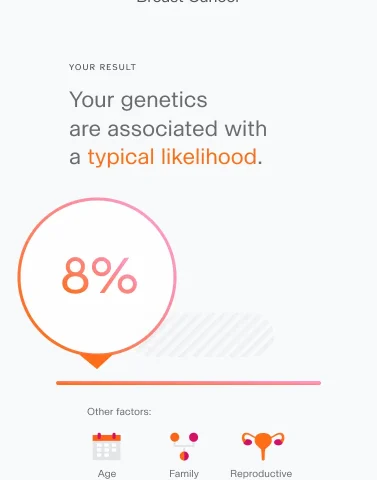
Get early insights into your genetic predispositions for developing disease, maximizing your opportunity to be proactive in areas of concern, instead of playing defense later. Includes a suite of genetic reports powered by novel polygenic risk scores (PRS), providing actionable insights on some of the most common conditions, with new ones added as the science becomes available.